
Phuket Intel Weekly
Phuket wants better tourists. That is the easy part.
Thailand wants higher-value tourism. Phuket is where that idea meets traffic, property, and reality.

Image: Phuket Old Town.
For years, Phuket’s tourism strategy looked simple from the outside. More flights. More rooms. More arrivals. More spending. Repeat.
The island got the growth. It also got the side effects: traffic that makes a 12-kilometre trip feel like a border crossing, residents priced out of convenient areas, public works that drag on forever, and beach towns that sometimes feel less like places and more like funnels.
Now Thailand is changing the language.
At GSTC 2026 in Phuket, the official message was clear: tourism should be about value, not just volume. Longer stays. Better spending. Lower pressure. More local benefit. Less obsession with raw arrival counts.
That sounds sensible. It is also the kind of thing every crowded destination says once the crowds become hard to manage.
The real question is whether Phuket can actually do it. Because “quality tourism” is not a slogan. It is a trade. If Phuket wants better tourists, it has to build a better version of itself for them to arrive into.
Thailand’s future tourist is not one person
Thailand has not defined a single dream tourist. It has drawn a map of the people it wants more of.
The future visitor is more likely to be a wellness traveller, a medical tourist, a remote worker, a long-stay family, a luxury guest, a yacht or cruise traveller, a sports visitor, a culture-led traveller, or someone who cares enough about place not to treat it like a disposable backdrop.
That is the official direction behind TAT’s “Value is the New Volume” strategy.
For Phuket, the important part is not the branding. It is the behaviour.
A family renting for three months in Cherng Talay uses Phuket differently from a three-night package tourist in Patong. A wellness guest in the north spends differently from a backpacker hopping between hostels. A digital nomad living in Rawai needs gyms, cafés, clinics, transport, and decent housing. A yacht visitor cares about marinas, restaurants, concierge services, and easy movement around the island.
The local point: Phuket’s next tourist is not just richer. They are harder to satisfy. They expect the island to work.
What to watch: If Phuket really wants these visitors, roads, healthcare, schools, clean public spaces, reliable transport, better service, and liveable neighbourhoods matter as much as beach photos.
The numbers still say volume matters
Here is the tension.
Thailand wants value-led tourism, but the machine is still fed by large numbers from a few major markets.
By April 13, 2026, Thailand had recorded 10,363,660 international visitors and about 506.12 billion baht in tourism revenue.
Key source markets, Jan 1 to Apr 13, 2026
Source: Portail Asie summary of official tourism data, Apr 13 2026. Phuket Airport cited Russia, China and India as backbone markets for Songkran.
Phuket Airport also named Russia, China, and India as the backbone markets expected to support Songkran demand.
For the April 10 to 15 Songkran period, Phuket Airport expected about 1,800 flights and 291,000 passengers. That was slightly lower than the 308,000 passengers expected during the same period in 2025.
The local point: Phuket is not walking away from mass tourism. It cannot. What it needs is less dumb volume: visitors who spend locally, stay longer, respect the place, and do not add chaos for everyone else.
RIU Palace is a clue, not the story
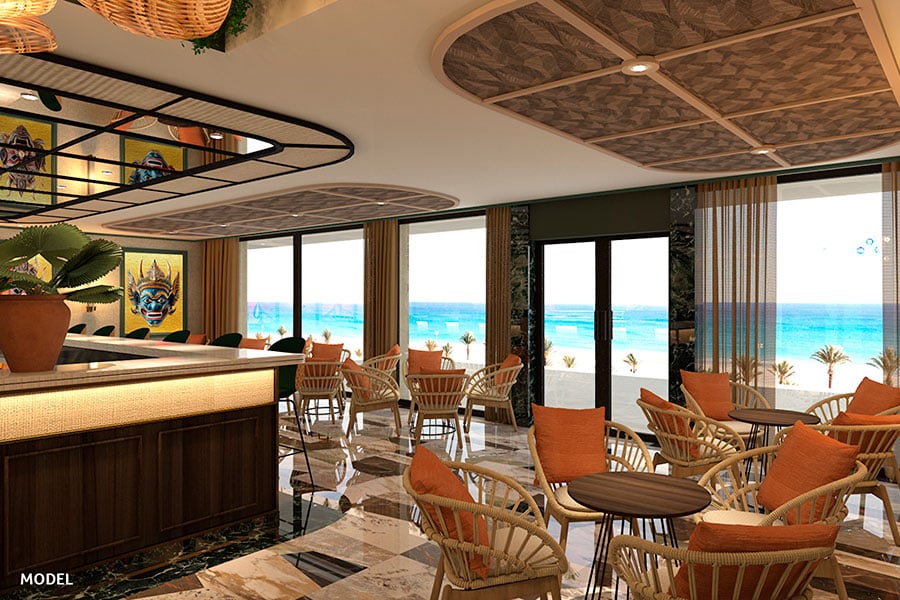
Image: RIU Palace Phuket.
RIU Palace Phuket opened in Mai Khao with more than 500 rooms and a 24-hour all-inclusive model. It is RIU’s first property in Southeast Asia.
That is useful data. But the story is not “new hotel opens.” Phuket gets new hotels all the time.
The story is where it opened and what kind of tourism it points toward.
Mai Khao is not Patong. It is not Kata. It is not Bang Tao. It sits near the airport, has long beach frontage, and still feels more spacious than much of the west coast. A large all-inclusive resort there tells us global operators see the north as more than a quiet edge of the island.
If Phuket’s future is higher-value and better-managed tourism, the north makes sense on paper. It has airport access, larger land parcels, quieter beaches, and room for resort-led development.
The local point: RIU Palace is not proof of quality tourism. It is a test case. Does this kind of development spread value into Mai Khao, or does it keep guest spending behind the resort wall?
Phuket’s infrastructure promises need local memory
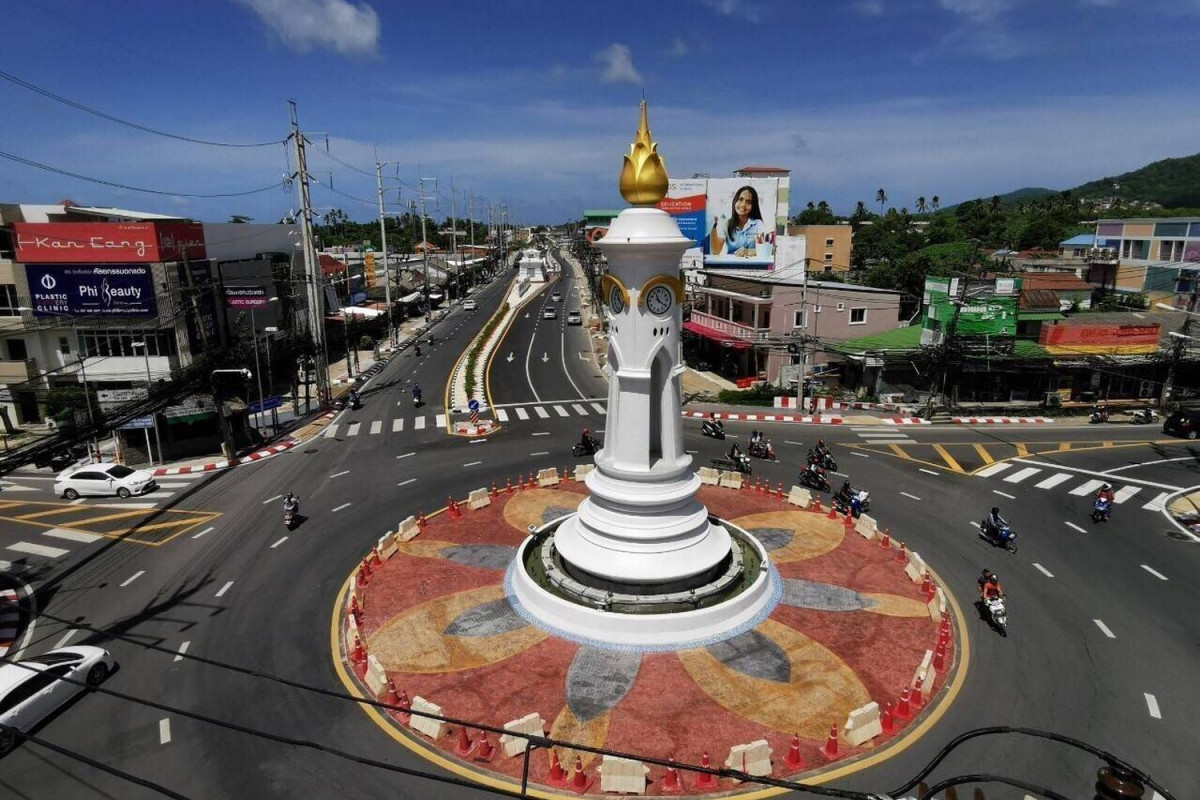
Image: Phuket road infrastructure coverage.
The infrastructure list sounds huge.
The government has talked about a 130 billion baht transport plan with nine major projects. The list includes the Kathu-Patong Tunnel, Muang Mai-Koh Kaew-Kathu Expressway, airport upgrades, Highway 4027 improvements, traffic-management systems, a light rail or EV-bus corridor from the airport to Chalong, and Andaman port and cruise terminal plans.
The airport capacity target is especially important: from 12.5 million to 18 million passengers per year.
If even half of this lands properly, Phuket changes. Airport to Patong gets easier. North-to-south movement improves. Public transport becomes less theoretical.
But locals have earned the right to be sceptical.
The Chalong underpass took years, disrupted daily traffic, and only became useful after a long period of pain. Nai Harn Lake’s redevelopment became another reminder that public projects here can be slow, messy, and frustrating even when the idea is not bad.
The local point: Phuket does not have a shortage of plans. It has a delivery problem.
The questions worth asking:
Will it actually open? Will it work? Will it be maintained? Will it make daily life better, or just create five years of construction before the next bottleneck?
Property: the old Phuket pitch is getting weaker
The property story connects directly to the tourism story.
If Phuket gets more long-stay families, wellness travellers, remote workers, medical visitors, and higher-value guests, then the best property is not simply “near the beach.” It is property that matches how people actually live.
That is why Cherng Talay and Bang Tao keep pulling attention. The appeal is not just Laguna or beach access. It is the fact that daily life works there. Schools, supermarkets, restaurants, gyms, clinics, cafés, and family routines are close enough to make the area feel like a base, not just a holiday zone.
Rawai, Chalong, and Kathu tell a different story. Less glossy, more practical. These areas matter because full-time residents need value, access, space, and normal life. Not everyone wants to pay a west-coast premium to sit in traffic.
The west coast luxury villa market still has its own logic. Scarcity sells. Sea views sell. Branded management sells. Kamala, Surin, Layan, and parts of Bang Tao will keep attracting buyers who want status, yield, or a scarce asset.
Mai Khao is the interesting one. If airport expansion, north-coast resorts, and infrastructure investment keep moving, the area becomes harder to ignore.
The weaker pitch is generic inventory. Phuket has plenty of supply. C9 Hotelworks counted 40,600 residential units for sale across 343 active developments in Q1 2025. Condos made up about 83% of that supply.
Q1 2025 Phuket property premium signal
Source: C9 Hotelworks / Thaiger summary, Q1 2025.
The local point: “Phuket is booming” is too lazy now. The better question is: booming for which product, in which area, for which buyer?
The property chart should show a split, not a boom
A clean 10-year Phuket property price chart is harder to source publicly than it should be. The available data is patchy, and a lot of what circulates comes from agencies with something to sell.
So we should not pretend there is a perfect index if we do not have one.
Sparse public datapoints, useful directionally
| Year | Metric | Value |
|---|---|---|
| 2018 | Overall median | ฿5.08M |
| 2018 | Condo median | ฿3.89M |
| 2018 | House median | ฿7.4M |
| 2020 | Condo median | ฿3.06M |
| 2020 | House median | ฿10M |
| 2023 | Overall median | ฿4.9M |
Source: FazWaz Phuket Properties Sales Market Report.
The honest story is better anyway.
The local point: Phuket property did not just “recover after Covid.” It split. Houses and villas gained power as people wanted space, privacy, and long-stay use. Condos became more selective. Branded and well-managed projects now command a clear premium. Generic units have to work harder.
The resident test is the one that matters

Image: Nai Harn Beach.
Quality tourism sounds good from a conference stage. It means less if residents still cannot move around the island.
Fuel costs show how quickly pressure spreads here. A small rise does not stay at the petrol pump. It reaches taxis, Grab, boat trips, deliveries, airport transfers, restaurant costs, and tour pricing.
Tourist behaviour matters too. The Songkran arrest of seven foreign tourists in Patong after obstructive water play went viral because it touched a nerve. Phuket likes fun. Phuket also has residents trying to drive home, run businesses, get kids to school, and live normal lives.
This is where “quality tourism” becomes real.
The local point: A quality tourist leaves more value than damage. That value can be money, repeat visits, local spending, respect for neighbourhoods, interest in culture, or simply not making the island worse for everyone else.
The bottom line
Phuket does not need another tourism slogan.
It needs the courage to admit that more is not always better, and that not every visitor creates the same value.
Thailand has picked the language: value over volume.
Now Phuket has to do the harder thing. Build the version of the island that makes that sentence true.
The hotels are coming. The flights are coming. The property buyers are watching. The infrastructure promises are back.
The question is whether this next phase makes Phuket better, or just busier with better branding.
Reader question: What would “better tourism” actually mean where you live in Phuket? Fewer buses? Better roads? Cleaner beaches? Higher-spending visitors? Or just tourists who behave like guests instead of customers?
Sources
- TAT Newsroom, “The New Thailand” and “Value is the New Volume” strategy.
- The Nation Thailand, GSTC 2026 in Phuket.
- Portail Asie tourism arrival data through Apr 13, 2026.
- RIU Palace Phuket, official hotel page.
- The Phuket Express, Phuket Airport Songkran forecast.
- Bangkok Post and PRD Thailand, Phuket infrastructure plans.
- C9 Hotelworks / Thaiger, Phuket Property Market Update 2025.
- FazWaz Phuket Properties Sales Market Report.
- Khaosod English, Songkran Patong arrest report.
That’s it for this week.
Thank you for being a subscriber. Have some feedback? Hit reply, we read every email. See you next week!